

Wildcard SPF Protection
Prevent email spoofing from unprotected subdomains
Security Warning
Your apex domain has SPF protection, but subdomains are not covered. Attackers can spoof emails from arbitrary subdomains like alerts.example.com or billing.example.com to impersonate your brand.
Why SPF Gaps Are Common
Most teams configure SPF for the apex domain and stop there. They publish a strict policy ending with -all and assume email spoofing is fully addressed.
SPF does not work that way.
SPF policies do not automatically apply to subdomains. If a subdomain has no SPF record, many mail servers treat it as unrestricted. Attackers are well aware of this and actively look for domains where the apex is locked down but subdomains are left open.
They do not need access to your main domain to impersonate your brand.
The Issue This Check Detects
A very common configuration looks like this:
- The apex domain has an SPF record with
-all - No SPF record exists for wildcard subdomains
This creates a gap where attackers can send email from arbitrary subdomains like alerts.example.com or billing.example.com.
To recipients, these emails still look legitimate. From a policy standpoint, the domain is not fully protected.
What This Check Validates
This check looks for SPF coverage beyond the apex domain.
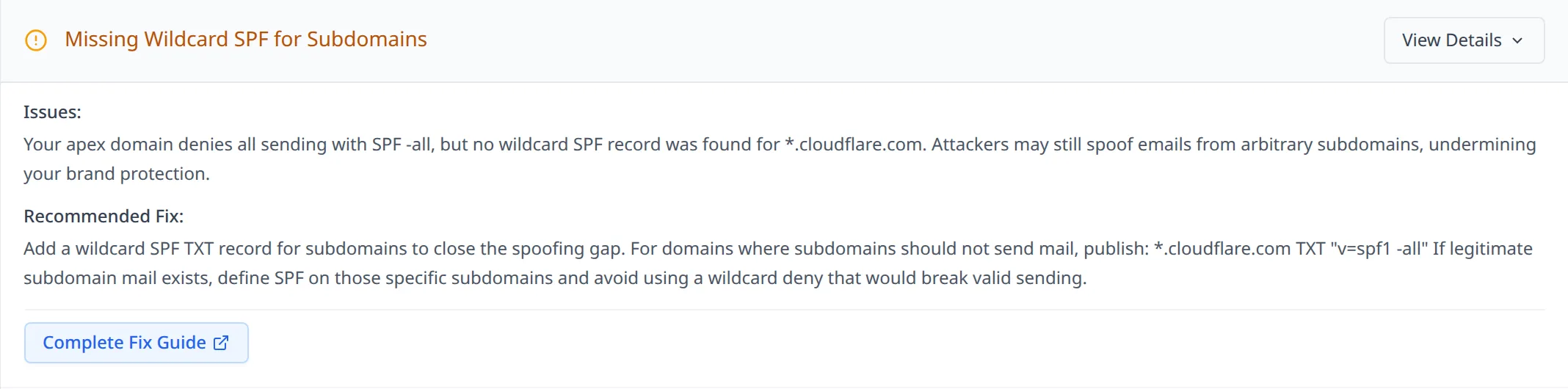
If the apex domain explicitly denies sending but subdomains are not covered by any SPF policy, the check reports missing wildcard protection. It does not assume intent. It highlights exposure.
How to Close the Spoofing Gap
If subdomains should never send email, the safest approach is a wildcard deny.
Wildcard SPF Deny Record
Publish an SPF policy that applies to all subdomains and explicitly denies sending:
# Wildcard SPF record for all subdomains
# This denies email sending from ANY subdomain

*.example.com.  IN  TXT  "v=spf1 -all"

# This tells receiving mail servers that no subdomain
# is authorized to send email unless explicitly stated otherwise
If Some Subdomains Send Email
If some subdomains do send email, the fix needs to be more targeted:
- Publish SPF records only on the subdomains that legitimately send mail
- Keep the apex domain SPF strict
- Do not use a wildcard deny if it would block valid sending
# Example: mail.example.com is allowed to send via a specific provider
# All other subdomains remain denied

# Apex domain - strict policy
example.com.       IN  TXT  "v=spf1 include:_spf.google.com -all"

# Sending subdomain - specific authorization
mail.example.com.  IN  TXT  "v=spf1 include:sendgrid.net -all"

# Wildcard - deny all others
*.example.com.     IN  TXT  "v=spf1 -all"
This approach keeps flexibility while closing the most common spoofing path.
Why This Matters
Attackers look for the easiest path. Subdomains are often forgotten, rarely monitored, and implicitly trusted by users. Locking down SPF only at the apex domain gives a false sense of security. This check exists to make sure your SPF policy actually protects the entire domain, not just the part that is easiest to remember.
Last updated: December 21, 2025